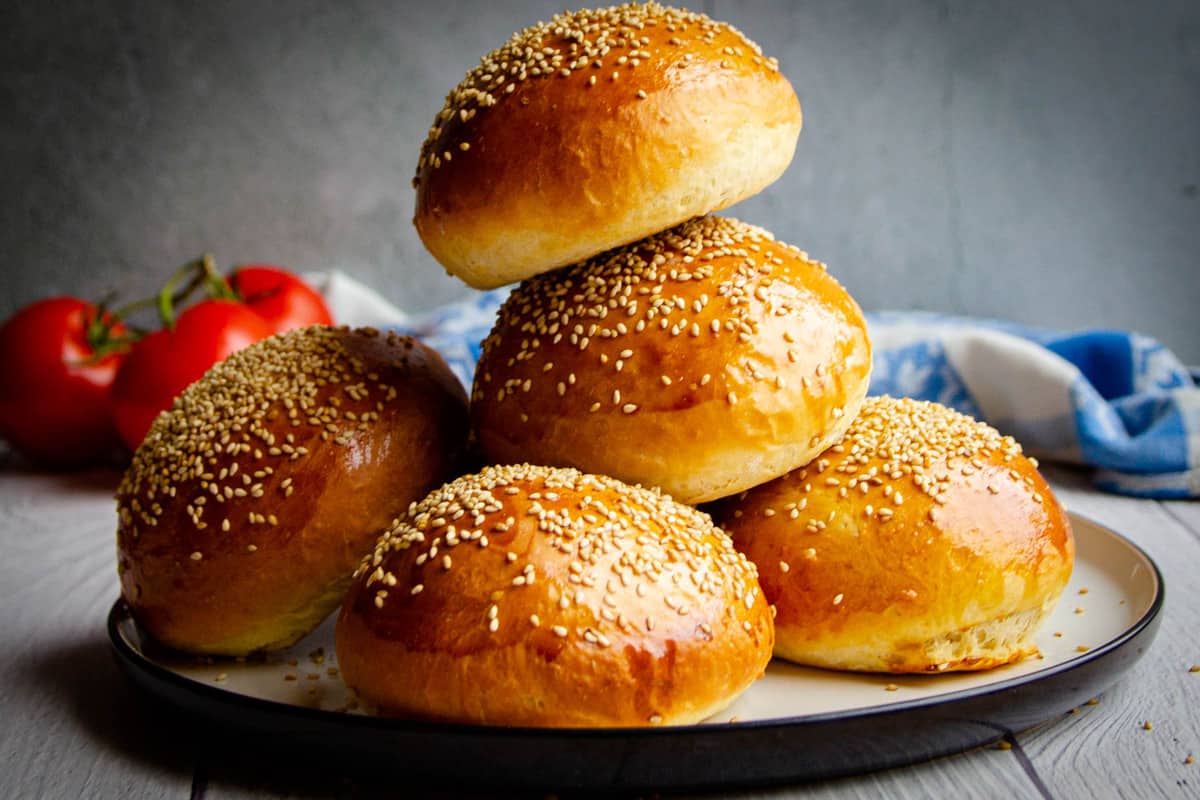
The Secret to Unforgettable Burgers: Why Homemade Burger Buns Reign Supreme
Imagine biting into a perfectly constructed burger. The juicy patty, crisp lettuce, tangy sauce – it all comes together in a symphony of flavor and texture. But what often goes overlooked, yet plays an undeniably crucial role in this culinary masterpiece, is the bun. A truly great burger isn't just about what's inside; it's about the foundation it rests upon. For too long, many of us have settled for dry, crumbly, or overly dense store-bought options that detract from the overall experience. But what if we told you that achieving super soft, fluffy homemade burger buns is not only incredibly satisfying but also surprisingly achievable? Prepare to elevate your burger game from good to absolutely legendary.
The common misconception is that making bread is a daunting, all-day affair, requiring advanced baking skills and endless patience. While some traditional bread recipes can be complex, the journey to incredible homemade burger buns is much simpler than you might think. We've discovered a game-changing technique, an age-old Asian secret that guarantees unparalleled softness and a delightful chew: the Tangzhong method. Forget those days of slaving over dough; with this ingenious approach, you'll be turning out bakery-quality buns that will make your family beg for these homemade burger buns every time.
Unlocking the Magic: What Exactly is the Tangzhong Method?
So, what is this "Tangzhong secret" that promises such exceptional results for your homemade burger buns? The Tangzhong method, also known as a water roux, is a brilliant culinary technique that originated in Asia, particularly in Chinese and Japanese baking. It's a simple pre-cooking step that fundamentally transforms how your dough behaves.
Here's the science behind the magic: Tangzhong involves mixing a small portion of flour with a liquid (typically milk or water) and heating it gently until it forms a thick, pudding-like paste. During this process, the starches in the flour gelatinize. This gelatinization allows the flour to absorb and retain significantly more liquid than it would in its raw state. Essentially, you're hydrating the flour more thoroughly even before it's mixed into the main dough.
The benefits of this increased hydration are profound. Dough made with Tangzhong is inherently softer, more pliable, and boasts a wonderfully airy crumb structure. Because the flour has absorbed so much moisture, the resulting buns stay fresh and soft for a longer period, resisting staleness far better than traditional recipes. It’s truly a game-changer for anyone seeking the ultimate soft, fluffy homemade burger buns. Once you experience the difference, you'll understand why it's considered the ultimate secret weapon for superior bread.
Crafting Your Super Soft, Fluffy Homemade Burger Buns: A Step-by-Step Guide
Making these incredibly soft homemade burger buns might just become your new favorite kitchen ritual. While the idea of bread making can seem intimidating, the Tangzhong method streamlines the process, making it accessible even for novice bakers. If you're looking for an even more hands-off approach, you can even adapt some of these principles or explore recipes that utilize a bread machine. For those interested in leveraging their appliance, you might want to master easy homemade burger buns with your bread machine as well.
Step 1: The Tangzhong Starter
This is where the magic begins. Combine a small amount of flour (typically 1 part flour to 5 parts liquid by weight) with milk or water in a saucepan. Whisk continuously over medium-low heat until the mixture thickens into a paste, similar to a white sauce or gravy. It should be thick enough to leave a trail when you run a spoon through it (around 149°F or 65°C). Immediately remove from heat, transfer to a bowl, and cover directly with plastic wrap to prevent a skin from forming. Allow it to cool completely to room temperature – this is crucial!
Step 2: Mixing the Dough
Once your Tangzhong is cool, combine it with the remaining wet ingredients, sugar, salt, and yeast in a large mixing bowl (or the bowl of a stand mixer). Gradually add your flour. Mix until a shaggy dough forms, then incorporate softened butter. The butter adds richness and contributes to the tender texture.
Step 3: Kneading for Gluten Development
Kneading is essential for developing the gluten structure, which gives the buns their elasticity and chew. If using a stand mixer, knead with a dough hook on medium speed for about 8-10 minutes. If kneading by hand, prepare for a good workout – it will take about 10-15 minutes on a lightly floured surface until the dough is smooth, elastic, and passes the "windowpane test" (stretching a small piece thin enough to see light through without tearing).
Step 4: First Rise (Bulk Fermentation)
Shape the kneaded dough into a large ball and place it in a lightly oiled bowl, turning once to coat. Cover the bowl with plastic wrap or a clean kitchen towel and let it rise in a warm, draft-free place for about 45 minutes to an hour, or until it has roughly doubled in size. A slightly warm oven (turned off, with the light on) can create an ideal environment.
Step 5: Shaping Your Buns
Gently punch down the risen dough to release the air. Turn it out onto a lightly floured surface. Divide the dough into equal portions – typically 6 large buns or 8 smaller ones. For perfectly round buns, flatten each piece into a disk, then pull the edges into the center, pinching them together to form a smooth ball. Roll the dough ball against the counter with a cupped hand to create surface tension. This technique helps the buns hold their shape during baking.
Step 6: Second Rise (Proofing)
Place the shaped buns on a parchment-lined baking sheet, leaving ample space between them. Cover lightly with plastic wrap or a clean towel and let them proof again in a warm spot for another 45 minutes to an hour, or until they look noticeably puffy and almost doubled in size. Be gentle at this stage; over-handling can deflate them.
Step 7: Egg Wash and Bake
Preheat your oven to 350°F (175°C). Carefully brush the tops of the proofed buns with an egg wash (one beaten egg mixed with a tablespoon of milk or water) for a beautiful golden-brown crust. If desired, sprinkle generously with sesame seeds. Bake for approximately 12-18 minutes, or until deeply golden brown and cooked through. An instant-read thermometer should register around 190-200°F (88-93°C) in the center.
Step 8: Cooling
Transfer the baked buns to a wire cooling rack immediately. This prevents the bottoms from becoming soggy. Allow them to cool for at least 10-15 minutes before slicing and serving. This resting period allows the internal structure to set and results in a better texture.
Expert Tips for Perfect Homemade Burger Buns Every Time
- Accurate Measurements are Key: Especially for the Tangzhong, precision is important. Use a kitchen scale for flour and liquid for the most consistent results.
- Mind the Temperature and Humidity: These factors significantly affect dough texture. On humid days, you might need slightly more flour; on dry days, a touch more liquid. Feel the dough – it should be soft and slightly tacky, but not overly sticky.
- Don't Rush the Rise: Patience is a virtue in bread making. Letting the dough rise sufficiently develops flavor and texture. If your kitchen is cool, a trick is to warm your oven for a few minutes, then turn it off and let the dough rise inside.
- Achieving Uniform Buns: For consistent size and baking, weigh your dough portions before shaping.
- Customize Your Toppings: While sesame seeds are classic, experiment with poppy seeds, everything bagel seasoning, or even a sprinkle of flaky sea salt.
- Storage: Store cooled homemade burger buns in an airtight container at room temperature for up to 2-3 days. For longer storage, freeze them in a freezer-safe bag for up to 3 months. Thaw at room temperature or warm gently in the oven.
Conclusion: Elevate Your Burger Experience Forever
There's simply no comparison between a burger served on a dry, lifeless commercial bun and one nestled in a soft, fluffy, perfectly baked homemade burger bun. The Tangzhong method removes the mystery and difficulty from bread making, empowering you to create buns that are not only superior in taste and texture but also imbued with the love and care of homemade goodness. Once you experience the pillowy softness and incredible flavor, your burgers will be forever transformed. So, ditch the store-bought, embrace the Tangzhong secret, and prepare for a burger experience that will delight your senses and impress everyone at your table.